
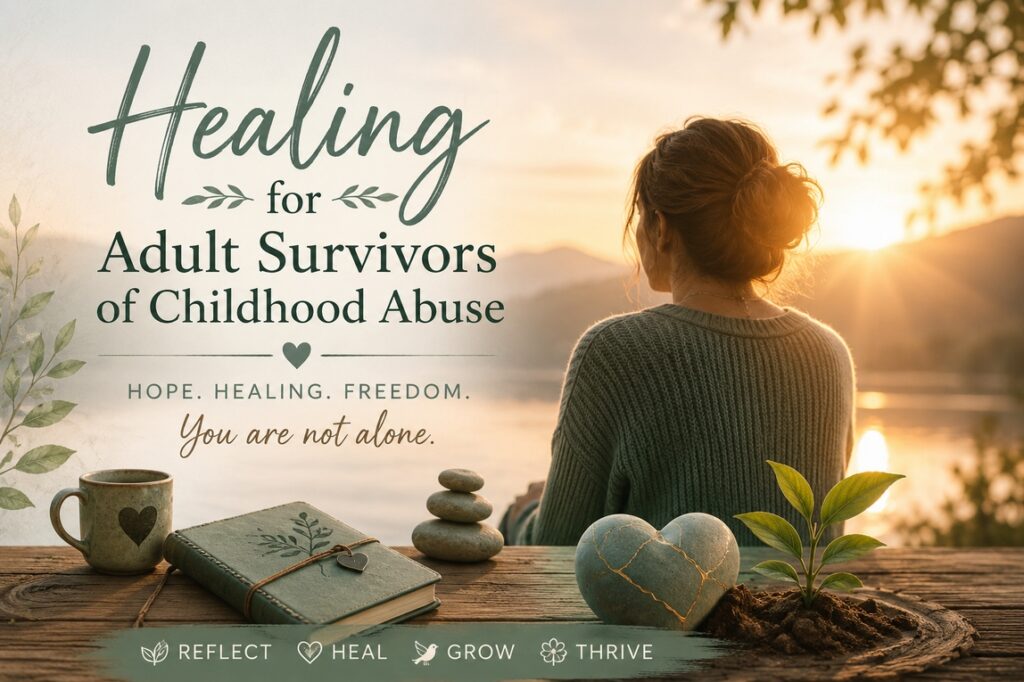
Healing for Adult Survivors of Childhood Abuse
Helping survivors understand abuse, begin healing, and find lasting hope through biblical wisdom and God’s grace.
Childhood abuse can leave wounds that follow us long after childhood ends. You may struggle with fear, shame, painful memories, or difficult relationships without fully understanding why. Yet your past does not have to determine your future.
I know this journey because I have walked it, and I want you to know that you are not alone.
Whether you are searching for answers, taking your first steps toward healing, or growing deeper in your faith, I pray you find the understanding, hope, and encouragement you need here.
Profit From Suffering By Learning Life Lessons
Don’t waste suffering by wallowing in darkness when you can profit from suffering by focusing on learning life’s lessons in trials and tribulations. – The battle every believer faces. I prayed to God for guidance a few days ago. I was confused about the direction to take with writing the Memoir and relinquished control to Him. I wasn’t expecting a fast response or ready for His answer. His…
Memoir Writing Progress – I’m Doing a Happy Dance
Revised on 11/23/24 I’m making significant progress on writing the Memoir—such advancement that I’m doing the happy dance. I’ve also learned a great lesson: Don’t be afraid to search and search for “the best takeaway” for the reader. The best takeaway gives readers hope for the future. It can be hope for a better life or a particular struggle they are facing. If the takeaway…
The Lasting Effects of Child Sexual Abuse
Revised on July 28, 2026 Child sexual abuse leaves wounds that extend far beyond the moment the abuse occurs. The choices of one person can affect generations, leaving emotional, spiritual, and relational scars that linger long after the abuse has ended. As a survivor, I witnessed those consequences within my own family.
All She Ever Wanted Was Love
A message of unconditional love. She was a quiet child, sensitive at heart. All she ever wanted was love. Her heart yearned for someone to care, to feel loving arms holding her securely. Tears flowed down her cheek in the darkness of night. Not a single person in sight.
Facing the Hidden Wounds of Abuse
Revised on July 28, 2026 We all carry memories we’d rather keep hidden. They may be painful experiences, broken relationships, abuse, loss, or mistakes we wish we could erase. Whatever they are, those hidden places often shape how we think, the choices we make, and the direction of our lives. For years, I carried those hidden wounds in what I called my “skeleton closet.”
About
I have lived through childhood abuse and domestic violence, and I write about the wisdom that can emerge through the journey of healing—what we can understand, reclaim, and ultimately transform from what we have survived.
Start Your Journey
Childhood abuse can leave wounds that shape the way we see ourselves, our relationships, and the world around us. Our past, however, does not have to determine our future.
Through personal stories, faith-filled encouragement, practical insights, and honest reflection, Abuse Journal offers hope for adult survivors seeking healing and freedom.
More than a memoir, The Secret Darkness invites every survivor who wonders if healing is possible. It is a story of resilience, redemption, and the life-changing hope that your past does not have to define your future—and that freedom can be found beyond yesterday’s shadows.
L.M. CARLETON
Rescued by Grace