
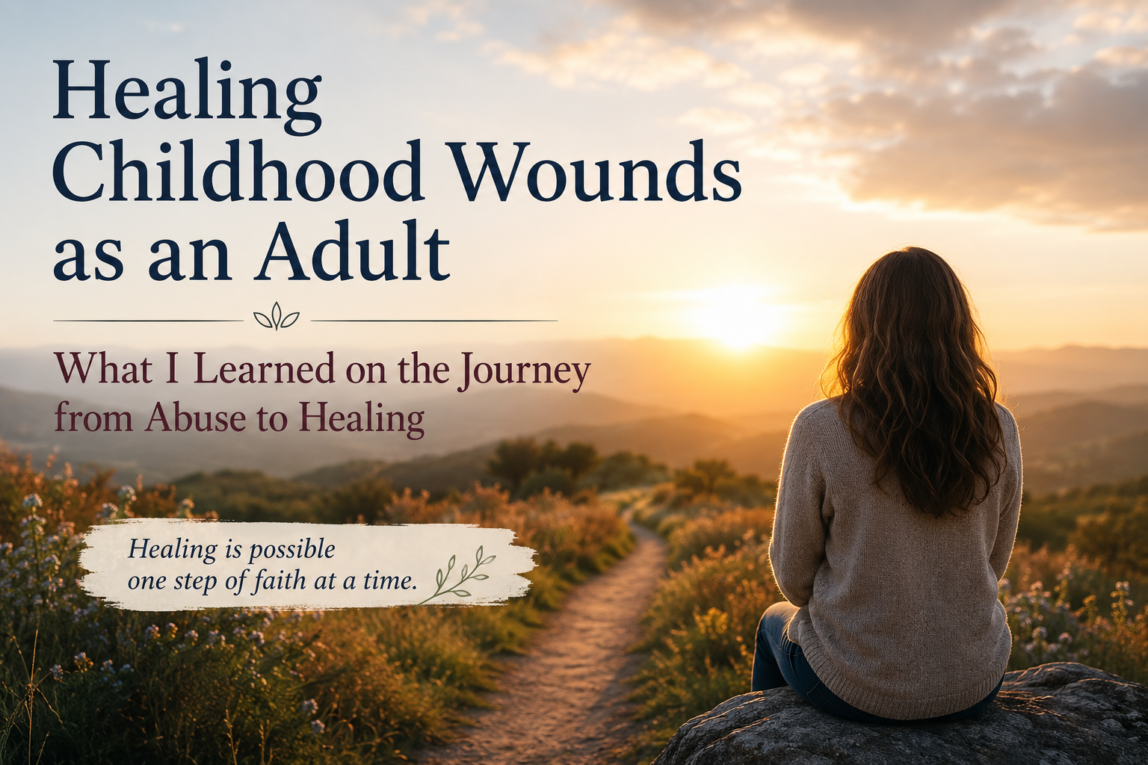
What I Learned on the Journey from Abuse to Healing and Healing Childhood Wounds shaped my growth.
Many people believe childhood ends when we become adults.
I discovered something different.
The wounds of childhood often follow us into adulthood. Consequently, they quietly shape the way we think, how we respond to others, how we build relationships, and how we see ourselves.
I didn’t recognize how deeply child abuse, neglect, and sexual abuse had affected my life until many years later. Only in retrospect did I understand the enduring impact on my choices, my trust, and my sense of safety within intimate relationships. That awareness shifted how I approached healing and seeking support.
When those hidden wounds were finally brought into the light, I began to understand how the past had influenced my choices, my relationships, and my healing journey.
Consequently, that understanding became the beginning of healing.
Childhood Wounds Don’t Stay in Childhood
I grew up in a dysfunctional home with an abusive, volatile father and an emotionally absent mother who failed to protect her children.
Near the end of eighth grade, my father was sentenced to serve time in jail on weekends and was no longer living at home. My mother remained by his side, leaving us to fend for ourselves without the guidance, protection, and stability children need.
As the oldest daughter at home, I became the protector of my younger siblings. I fought to keep them safe and cared for them the best I could. At a young age, I learned how to survive.
At the time, this life felt normal because it was all I had ever known. I didn’t realize these experiences were leaving wounds that would quietly follow me into adulthood.
How Childhood Wounds Shape Your Adult Life
It took me more than twenty years to understand that the wounds I carried as a child had quietly followed me into adulthood.
As a child, I learned to survive instead of being taught how to thrive. I became responsible long before I was ready. I protected my younger siblings, tried to keep the peace at home, and accepted situations no child should ever consider normal.
Those experiences shaped how I viewed myself and the world around me.
Because I grew up without healthy guidance, I didn’t recognize the warning signs of an abusive relationship. When my future husband first became physically abusive while we were dating, I knew something was wrong. Yet, I didn’t understand how dangerous that path would become. Looking back now, I can see that my childhood had conditioned me to tolerate behavior that should never have been accepted.
The wounds of neglect also left their mark. I longed to be loved, accepted, and protected. Like many survivors, I searched for those things in relationships instead of finding them within a healthy foundation. What I didn’t realize was that two broken people had come together, each carrying childhood wounds that neither of us understood.
The effects reached far beyond my marriage.
Fear became familiar. Shame remained hidden beneath the surface. Trust did not come easily. I questioned my worth, blamed myself for circumstances beyond my control, and carried burdens that were never mine to bear.
For many years, I believed these struggles were simply part of who I was.
I didn’t realize they were the lingering effects of childhood wounds that had never been acknowledged or healed.
Only when I began looking honestly at the past did I understand how deeply those experiences had influenced my choices, my relationships, and my life.
That understanding didn’t keep me trapped in the past.
It opened the door to healing.
The Turning Point
It took me more than twenty years to understand the lasting effects of childhood abuse.
The turning point came after an unhealthy long-term relationship ended and an unexpected encounter with my estranged husband—the man who had abused me during our marriage. Looking back, I believe God used those events to stop me from running any further.
For years, I had buried the past beneath a wall of emotional protection. I believed if I didn’t think about what had happened, I could leave it behind.
I was wrong.
One evening, I sat alone on my living room floor and cried for more than an hour. As I poured out my heart before God, memories I had hidden for years began to resurface. The emotional wall I had built to survive finally crumbled.
For years, I had asked the same question:
“Lord, why do I always suffer?”
It was a question born out of years of pain, confusion, and brokenness.
Looking back now, I realize God wasn’t ignoring my question. He was leading me to understand it.
Over the months that followed, I began reflecting on my childhood and the events that had shaped my life. I wrote to release years of pain, fear, and unanswered questions. The more I wrote, the more I realized that the wounds of childhood had followed me into adulthood.
I also discovered a truth that has guided my healing ever since:
You can’t heal what you don’t acknowledge.
What Helped Me Heal
Healing began with honesty.
For many years, I tried to leave the past behind by pretending those wounds didn’t exist. Real healing began when I was willing to bring them into the light, acknowledge what had happened, and allow God to begin healing my broken heart.
Writing became an important part of that journey.
Putting words to my experiences helped me release emotions I had carried for years. As I reflected on the past, I began to understand how deeply childhood abuse, neglect, and sexual abuse had shaped my life.
I discovered that healing doesn’t happen by ignoring the pain.
It happens by walking through it.
The wounds were deeper than I had realized. As the lasting effects surfaced, I permitted myself to grieve, admit my anger, face my fears, and express emotions I had hidden for decades.
I also learned that when hidden wounds are brought into the light, they begin to lose their power.
As I accepted the things I could not change, I discovered something even greater—God’s grace.
Instead of defining myself by what had happened to me, I began to see myself through His love, mercy, and forgiveness.
That changed everything.
Allow God to Renew Your Heart and Mind
Healing is more than remembering the past or recovering from painful experiences.
I discovered that true healing is a journey of faith.
As I trusted God and spent time in His Word, He began changing me from the inside out. He created a clean heart, renewed a right spirit within me, and gradually transformed the dysfunctional ways of thinking I had carried for years.
“Create in me a clean heart, O God; and renew a right spirit within me.” — Psalm 51:10
That transformation didn’t happen overnight.
It happened one step of faith at a time.
As I drew closer to God, He gave me the courage to face my past, the strength to keep moving forward, and the wisdom to let go of anger, bitterness, and resentment. In time, He taught me how to forgive those who had wounded me—not because what happened was acceptable, but because forgiveness freed my own heart.
Looking back now, I understand that healing wasn’t something I accomplished on my own.
“And be not conformed to this world: but be ye transformed by the renewing of your mind…” — Romans 12:2
It was God’s grace at work within me.
As my faith grew, so did my understanding of His love, His mercy, and His purpose for my life. Instead of merely surviving, I began learning how to live in the freedom Christ had always intended for me.
Healing Is Possible
Childhood wounds may shape part of your story, but they do not have to write the ending.
I know this because I have lived it.
God did not erase my past, but He transformed the way I understood it. Through His grace, He healed my broken heart, renewed my mind, and showed me that my past did not define my future.
Today, I can look back with understanding instead of confusion, hope instead of despair, and faith instead of fear.
If you are carrying wounds from childhood, I want you to know healing is possible when you walk by faith in the light of truth.
If you are beginning your own healing journey, I encourage you to take the first step. You don’t have to understand everything today. Begin by acknowledging what happened, bringing the hidden wounds into the light, and allowing God to guide you one step at a time.
Healing is not about forgetting your past.
It’s about allowing God to transform it.
Related Post: Breaking the Cycle of Generational Trauma
Leave a Reply