
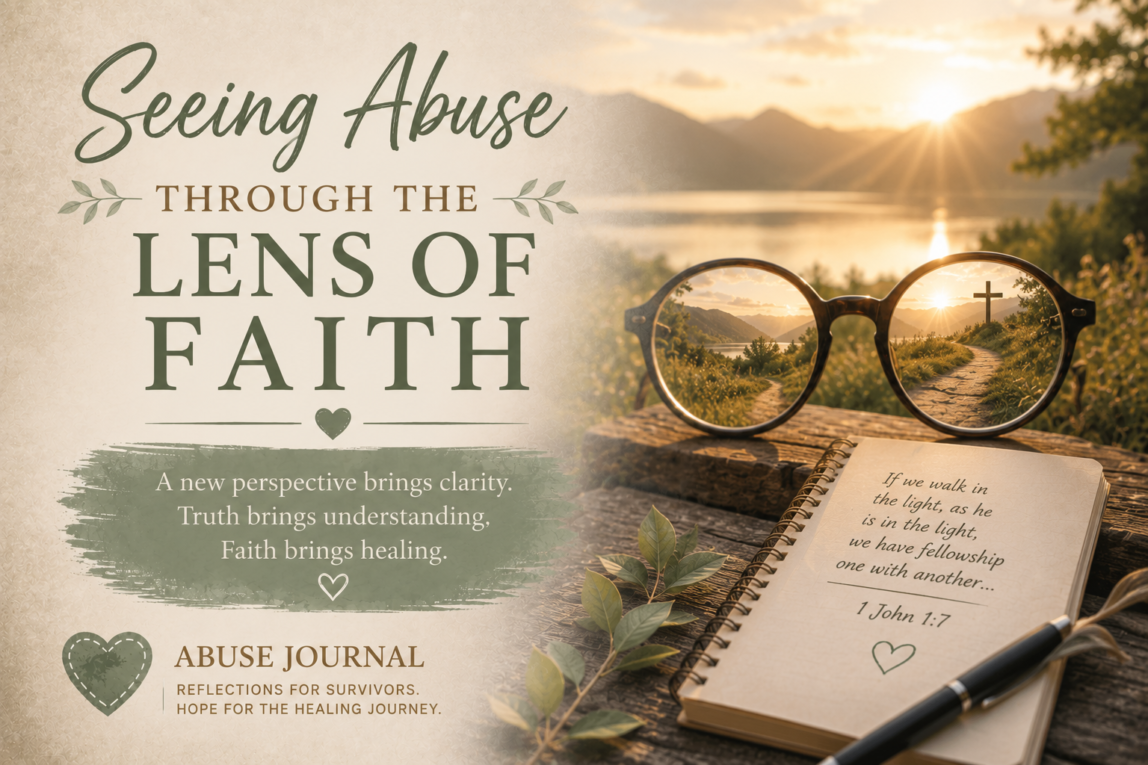
For many years, I viewed my life through the lens of pain.
I sought faith-based healing from abuse to find relief.
I saw childhood abuse, child sexual abuse, domestic violence, loss, fear, and broken relationships. These experiences shaped how I understood myself and the world around me. I searched for answers, trying to understand why people abuse others and why so many survivors continue to carry the weight of their past.
The more I searched for answers through human understanding alone, the more questions I had.
It wasn’t until my faith in Jesus Christ began to grow that my perspective slowly changed. I began to discover that faith-based healing from abuse was not about denying what had happened to me. It was about learning to see my story differently—with truth, grace, hope, and the assurance that my past did not have the final word.
A Different Way of Seeing
Several years ago, I crossed paths with a woman named Melanie Fagen through her blog, She Breathes Hope. She used a simple phrase that stayed with me long after our conversation had ended.
The lens of faith.
I don’t know exactly what she meant by those words, but God used them to change how I viewed my own story.
Ultimately, those three words challenged me to look beyond my pain.
I began asking a different question about faith-based healing from abuse.
Instead of asking, “Why did all of this happen to me?”
I began asking,
“Lord, what do You want me to understand?”
That question didn’t erase my past.
It changed the way I approached it.
Understanding Abuse Through a Human Perspective
When I looked at my life only through human understanding, I saw myself primarily as a victim.
I focused on everything that had been done to me.
Those experiences were real, and they should never be minimized. Understanding trauma, recognizing unhealthy relationships, and learning how childhood experiences can affect adulthood were important parts of my healing.
But understanding alone could not heal my heart.
I could learn why certain patterns developed. I could recognize the effects of abuse. I could understand how fear, shame, and unhealthy relationships had influenced my choices.
Yet I still needed something more.
I needed hope.
Looking Through the Lens of Faith
As I grew in my relationship with Christ, I began to see my life differently.
God wasn’t asking me to deny what had happened.
He was inviting me to understand it through His truth.
The abuse I experienced did not define my identity.
The mistakes I made did not determine my future.
My past was no longer the end of my story.
Through God’s grace, I began to recognize unhealthy patterns, understand how childhood experiences had influenced my adult life, and see how God could redeem even the darkest chapters of my journey.
This became an important part of my Christian healing journey.
Healing did not mean pretending the pain never happened. It meant allowing God to meet me in the places where I had been wounded and trusting Him with the parts of my story I could not change.
Understanding abuse became part of my healing—not because I finally had every answer, but because I learned to trust the One who does.
Truth Brings Clarity
Healing begins with truth.
Not the truth we wish were different.
The truth that brings hidden things into the light.
For years, parts of my story didn’t make sense to me. Some things had been buried beneath fear, shame, confusion, and survival.
But as I honestly acknowledged my past, I discovered that understanding abuse was never meant to leave me trapped there.
It was meant to help me recognize unhealthy patterns, make wiser choices, establish healthy boundaries, and move toward healing.
Truth became the doorway.
God’s grace made healing possible.
It reminded me that I was loved beyond my faults and mistakes and that my identity was not determined by what others had done to me.
More Than a Survivor
For years, I believed my story was about surviving abuse.
Today, I believe it is about something much greater.
It is about learning to trust that God’s power can bring healing and redemption, even from the deepest wounds.
It is the story of God’s faithfulness.
He met me in my darkest moments, renewed my mind, restored my hope, and gave purpose to the pain I once believed would define me forever.
When I look through the lens of faith today, I no longer see only what was done to me.
I see the God who never left me.
Looking Through a New Lens
Abuse may shape part of your story, but it does not have to define your future.
Understanding what happened is important.
Recognizing unhealthy patterns is necessary.
Learning to establish healthy boundaries can be part of recovery.
But lasting healing can begin when truth meets God’s grace.
For survivors who have experienced childhood abuse, sexual abuse, domestic violence, or other forms of trauma, faith may offer a different way of understanding the healing journey.
It doesn’t erase the need to acknowledge what happened. It doesn’t require us to ignore the effects of trauma or the importance of seeking appropriate support.
Instead, faith can give us another lens through which to view our story.
A lens of grace.
A lens of hope.
A lens that reminds us that what happened to us is not the whole story.
When we begin to see our lives through the lens of faith, we can discover that even the darkest chapters can become part of a testimony of hope, healing, and redemption.
The light of Christ does not erase the past.
It illuminates the path forward.
Leave a Reply